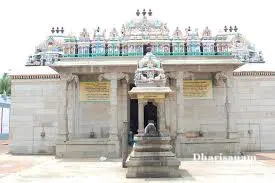
PLACE: THIRUVATHIGAI VEERATTANAM
Sri Veerattaneswarar Temple at Thiruvadhigai.
This is the 7th Devara Paadal Petra Shiva Sthalam in Nadu Naadu.
Devotees seeking the grace of Lord Veerattaneswarar are relieved from the three basic evils – arrogance (“Aanavam”), fate (“Karma”), and illusion (“Mayai”).
Visited on: Sunday, 18th September, 2016
Location
Thiruvathigai is located at a distance of about 2 kms from Panruti bus stand. From Cuddalore it is about 24 kms on the Cuddalore to Panruti route.
Other Devara Paadal Petra Shiva Sthalams near this temple are – Thiruvamathur, Thiruthuraiyur, Thirumundeecharam, T.Idaiyaru, Thirunavalur and Thiruvennainallur.
General information
- Moolavar
- Sri Veerattaneswarar / Sri Athigainathar
Sri Tiripurasamhara Murthy - Ambal
- Sri Periya Nayaki, Sri Thiripurasundari.
Sri Thiruvathigai Nayaki - Theertham (Holy water)
- Shoola Theertham, Gadilam river,
Chakra Theertham - Sthala Vriksham (Sacred Tree)
- Sarakkontrai
- Pathigam (Hymn) rendered by
- Saint Thirugnanasambanthar (1)
Saint Thirunavukkarasar (Appar) (16)
Saint Sundaramurthy (Sundarar) (1)
- This is one of the 276 Devara Paadal Petra Shiva Sthalams and 7th Shiva Sthalam in Nadu Naadu.
- Lord Shiva in this temple is a Swayambumurthi (self-manifested). The Moolavar is big, Shodasa Lingam – with 16 stripes.
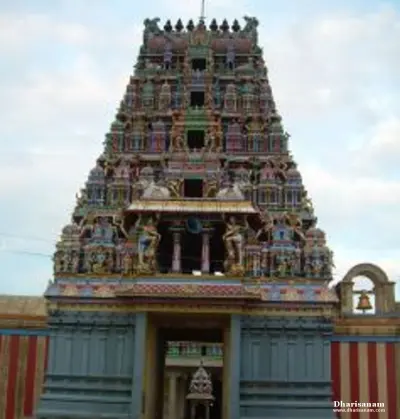
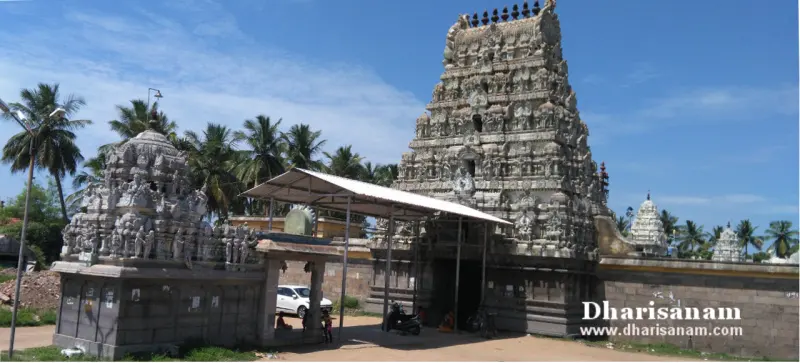
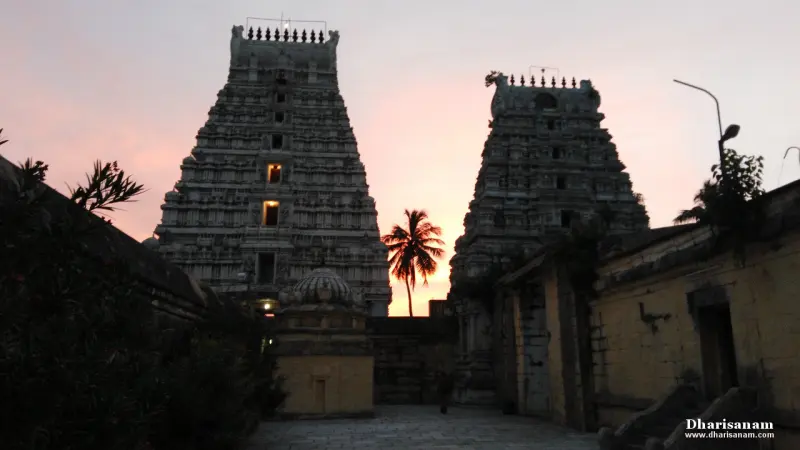
- This east-facing temple’s first main tower has very beautiful sculptures and has 7-tiers and the second main tower has 5-tiers. The temple has 3 corridors.
- This is the third of the eight Veerattana Sthalams.
- It is believed that “Thiripura Samharam” took place from here.
- Saint Thirunavukkarasar sung his first hymn (Pathigam) in this temple.
- All the three saints (Moovar) have rendered hymns on Lord Shiva of this temple.
History of the temple
This huge ancient temple is located in the erstwhile Thirumunaippadi Nadu. It is believed that this temple is about 2000 years old. It is built in 7 acres of land on the northern banks of the river Gadilam. The historical names of this place are Aadipuri, Athikapuri, Kontraivanam, Athiyaraimangai and Athirasamangalam.
It is said that this temple is older than Thanjavur Brahatheeswarar Temple. The sanctum tower (Moolavar Gopuram) of Tanjore and Kanchipuram Kailasanathar temple were built after seeing this temple. In all the three temples, the shadow of the tower is not falling on the ground. Also, the entrance steps to the sanctum sanctorum of this temple are also from the side, similar to the other two temples. Another attraction of this sanctum sanctorum and its tower is – the structure is like 8-sided polygon. There are beautiful and a lot of idols and sculptures around all sides, which we cannot find in any other temple. The stone tower is looking like a big Chariot (“Ther” in Tamil).
In Hindu mythology, there are eight special places where it is believed that Lord Shiva vanquished various demons and exhibited acts of bravery. These places are Veeratta Sthalams. In Tamil, this is referred to as “Atta Veerattanam” (“Atta” means eight and “Veeram” means bravery). Thiruvathigai is the third Veeratta Sthalam where the lord is believed to have done the “Thiripura Samharam”. The other seven Veeratta Sthalams are –
- Thirukkandiyur where one of Lord Brahma’s five heads was plucked;
- Thirukkovilur where the demon Andhakasuran was vanquished;
- Keezha Parasalur where Dakshan’s yagna was stopped and he was killed;
- Thiruvirkudi where the demon Jalandharasuran was killed;
- Thiru Vazhuvur where the elephant Gajasuran was vanquished;
- Thiru Korukkai where Manmathan was burnt and later blessed;
- Thirukkadaiyur where Lord Yama was kicked and punished.
Legend
It is believed that three demons – Tharakatchan, Kamalakshan and Vidyunmali had obtained the blessings of Lord Shiva through rigorous penance. Using the gifts that Lord Shiva had given them, they constructed three forts made of gold, silver and iron respectively in three different towns for their protection and these forts became impregnable to any kind of retaliation by anyone. The demons started terrorising the celestial gods and sages who went to Lord Shiva to seek his help.
When Lord Shiva decided to destroy these demons at the request of the celestial gods, the world turned into a chariot, Suryan and Chandran became the drivers (Saradhi), the celestial gods (Devas) formed the wheels and Meru, Vasuki and Agni became the bow, the arrow and the arrow’s tip respectively.
The celestial gods accompanying the lord thought that he would win the war with their help only. Realizing their pride, Lord Shiva used no weapon here but he simply laughed at the demons. It is believed that Lord Shiva laughs three types of laughs – “Punnakai”, “Thannakai” and “Vennakai”. When he laughed the Vennakai, a fire ball came out of his laughter and reduced the demons and their forts to ashes. Realizing their folly, the Devas sought pardon from the lord. The arrogance of both the demons and the Devas was destroyed simultaneously by the lord.
This event is called “Thiripura Samharam” – “Thiri” meaning three, “Puram” meaning town and “Samharam” meaning destroy in Tamil. This Samharam took place from this temple, hence this place is known as one of the eight Veerattana Sthalams. The place where the destroyed forts fell is still known as “Vekakkollai”. Lord Shiva pardoned the demons and made two of them as his security guards – dwarapalakas. One became player of his “Kudamuzha” instrument (an ancient five-faced musical instrument).
Another legend is that Saint Thirunavukkarasar’s sister, Thilagavathiyar, whose fiancé was killed in a war and became a saint, rendered her services in this temple. It is believed that Thirunavukkarasar (Appar) returned to Hinduism from Jainism after he recovered from his acute stomach ailment on his sister Thilagavathiyar’s advice to take the temple’s holy water and applying the holy ash (Viputhi) on his forehead. He was miraculously cured instantly of his deadly stomach pain.
Out came spontaneously Appar’s first hymn called Kodhil Neediya Tirupathigam beginning with the line “Kootru Aayinavaru Vilakka hileer”. Pleased with his poetic skill, Lord Shiva honoured Appar with the title Thiru Navukku Arasar-Thirunavukkarasar meaning king of tongues. Prior to that he was known as Marulneekiyar and Dharumasena. This is also the place where Lord Shiva is believed to have granted darshan to Appar in wedding form.
Pallava King, Mahendra Verman, who was a firm believer of Jainism, earlier tried to kill Appar due to his abandoning Jainism and going back to Hinduism but was unsuccessful in all his efforts. Later he realized Appar’s superiority and requested him to forgive him. At the mercy of Appar, the king’s faith in Shaivism was reinstated and he constructed a Shiva Temple called “Gunabara Veecharam” which is nearby to this temple. To read more about Thirunavukkarasar click the link…
Another legend is that when Saint Sundaramurthy Nayanar visited this place, he did not want to step into the temple and stayed away in a Mutt (madam) due to his high respect towards Saint Thirunavukkarasar (Appar) as he was doing cleaning services (“Uzhavara pani”) in this temple. Lord Shiva blessed him with “Thiruvadi Theetchai” (while Sundarar was sleeping Lord Shiva disturbed him with his legs) at Chidambareswarar temple, now called as Kodalampakkam / Sidha Mutt. On realizing that the man who disturbed his sleep was none other than Lord Shiva himself, next day morning he went to the temple and rendered his hymn.
At a later date, Thiruvathigai temple was used as a fort and storage place for arms by the French Government, Arcot Navabs, Marathis and the Britishers.
Deities in the temple
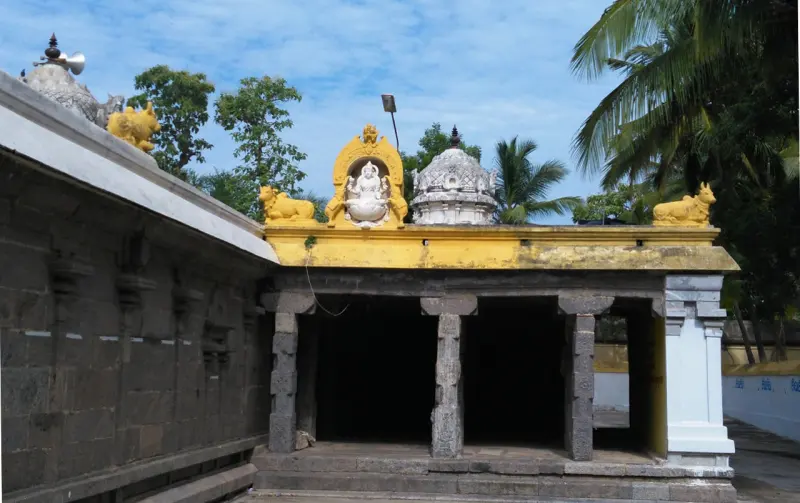
Apart from Lord Veerattaneswarar and Goddess Periyanayaki shrines, shrines and idols of lords Vinayagar, Murugan, Dakshinamurthy, Suryan, Bairavar, Saneeswarar, Durgai, Natarajar, Kasi Viswanathar, Gajalakshmi, Navagraham, 63 Nayanmars and a row of Shiva lingams can be seen in the corridors.
The lingam worshiped by Lord Mahavishnu is known as “Vishnulingam” and is kept in the Goddess Thiripurasundari’s shrine.
The lingams worshiped by Lord Brahma, Garudan and Pandavas are known as “Nanmuka lingam”, “Garuda Lingam” and “Pandava Lingam”. These lingams can be seen in the corridors.
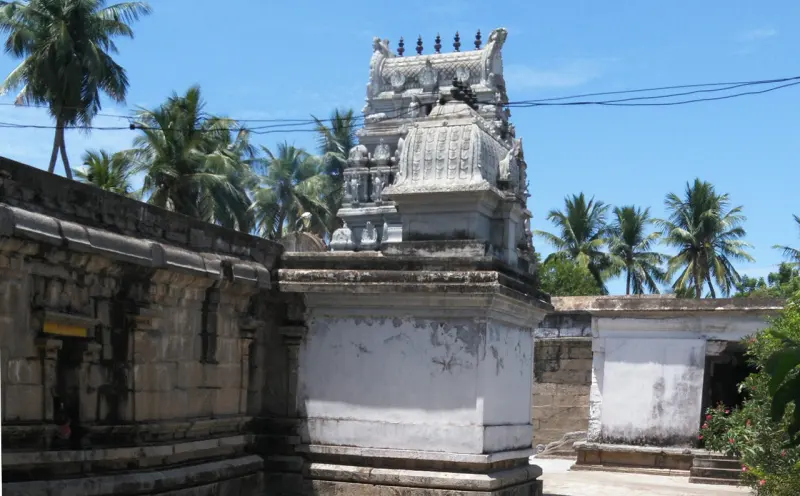
Another unique feature of this temple is that there is a 5-faced Shiva Lingam in the corridors which is a rare one and may not be available to see in other temples.
There are separate shrines for Appar and his sister Thilagavathiyar in this temple.
Salient features
As this place (Sthalam) has more specialities than others, it is called “Athigai” (“Athigam” meaning more in Tamil).
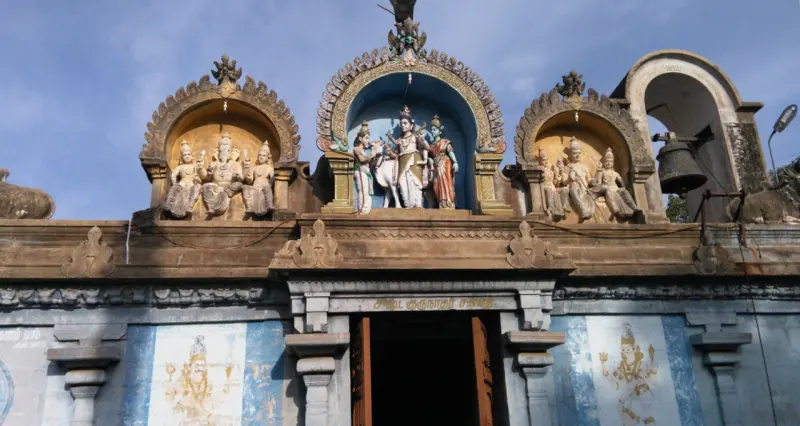
It is believed that Lord Shiva married Goddess Parvathi here, so the Goddess shrine is on the right side of the lord shrine. Also, both these shrines are facing east. This is considered to be as they are in their wedding posture which is auspicious for worship. The sculpture depicting the wedding of Shiva-Parvathi is behind the presiding deity.
The temple’s sacred theertham, “Shoola Theertham”, which is believed to have cured Saint Appar’s deadly stomach pain, can be seen in the corridors.
The Chakra Theertham, believed to have been created by Lord Mahavishnu with his Chakra (disk like weapon), can be seen in the temple complex.
The place where Saint Thirunavukkarasar’s sister Thilagavathiyar had penance and the garden from where she collected the flowers for the lord can still be seen in the temple.
It is believed that Indira the king of Devas, Lords Brahma and Mahavishnu, Garudan, the Pandavas, Saptha Rishis (seven sages), Saint Thirumoolar, Vayu the God of Wind, Varuna the God of Rain, Yama the God of Death visited this temple and worshiped the lord Veerattaneswarar.
It is believed that Lord Shiva gave his cosmic dance darshan while the Bhoodaganas (the lord’s servants) were singing to his dance, to Saint Thirugnanasambanthar. In his hymn of this temple, the saint mentioned this dance darshan in all the stanzas.
The temple has many firsts. It is here that the lord destroyed the three great evils – arrogance, fate and illusion.
- Devaram hymns were uttered first here.
- Saint Appar started his temple cleaning services (Uzhavarappani) in this temple only.
- All Shivagama pooja codes were formulated from this temple.
- Car festival and design of cars were drafted from this place.
- This is the only temple that is adored in great number of devaram hymns.
- It is also noteworthy that the devaram hymns of the three saints contain more mention about the Thiripura Samharam episode.
Saint Arunagirinadhar has sung songs in praise of Lord Murugan of this temple in his revered Thirupugazh.
At the entrance of the temple, on both sides there are 108 beautiful reliefs of dancing girls which explore the 108 Shiva Dandava postures.
Greatness of this temple
Devotees seeking the grace of Lord Veerattaneswarar are relieved from the three basic evils (“Mummalangal”) – arrogance (“Aanavam”), fate (“Karma”), and illusion (“Mayai”).
Devotees believe that by visiting this temple they reap the benefits of seeing the lord in his abode Kailash.
Devotees also believe that their diseases will be cured by prayer, stomach related pains and ulcers in particular by applying the sacred ash and consuming it, freedom from enemies, disappearance of any curse and ensuring total salvation.
Important festivals
10-day Vasantha Utsavam during Panguni (Mar-Apr), Chithirai (April-May) Sadayam star festival on Saint Appar Salvation event in the Tamil month of Chithirai (Apr-May), 10-day Brahmotsavam in the Tamil month of Vaikasi (May-June), 10-day Aadi Pooram in the Tamil month of Aadi (July–Aug) and 10-day Saint Manickavasakar Utsavam and Thiruvadhirai in the Tamil month of Margazhi (Dec–Jan) are the main festivals celebrated in this temple. Pradosham is also observed regularly.
Temple timings
From 06:00 AM to 12:00 noon and 04:30 PM to 08:30 PM.
Temple address
Sri Veerattaneswarar Temple,
Thiruvadhigai Post,
Panruti Taluk,
Cuddalore District,
Tamil Nadu-607 106
Tele: +91 98419 62089, 94439 88779, 94427 80111.
 1
 2
 3
 4
 5